I help Swiss companies build their visibility in AI. I’m Corina Burri, an SEO and GEO consultant from Zurich. I’ve worked in SEO and content marketing since 2016 and have been doing GEO since it began.

My offer: GEO audit, action plan, analytics
I work in three phases. First we look at where you stand. Then we implement. Then we measure what it delivered.
Phase 1, months 1 and 2
GEO audit and strategy
Technology (AI bots, rendering, schema), content citability, entities and mentions. Plus prompt research and competitor comparison in ChatGPT, Claude, Perplexity, and AI Overviews.
Output: personalized action plan
Phase 2, months 3 to 6
Implementation
We work through the plan. I implement or support your team. Check-ins every two months, plus a shared project plan you can view anytime asynchronously.
Output: optimized pages and processes
Phase 3, quarterly
Digital analytics
Looker Studio dashboard with AI referral traffic from GA4, mentions in models, and visibility on your prompts. Measured over time series, because AI answers fluctuate.
Output: numbers for leadership
What does GEO consulting cost in Switzerland?
There are several models: the GEO audit as a one-time project for CHF 4500.00.
Or a monthly support over six to twelve months at CHF 3040.00. You’ll find the approaches under Services and pricing.
GEO agency or GEO consultant: what’s right for you?
I’m not a large GEO agency, I’m a senior GEO consultant. That means: no sales pitch from one person then implementation by a junior team. Instead, ten years of hands-on experience and radical honesty. I implement myself and think along with you.
A GEO agency is the better choice if you need large implementation teams, run multiple languages in parallel, or want to manage media budgets simultaneously. I’ll tell you that in our first call.
Who are you, Corina?
I’m Corina Burri, an SEO & GEO consultant and public speaker from Zurich. Since 2016 I’ve worked in SEO and content marketing, from marketplaces to e-commerce to enterprise. Before I went freelance, I was Team Lead SEO & Digital Analytics at a major Swiss bank. You get ten years of hands-on experience, and if I don’t know something, I’ll tell you transparently.
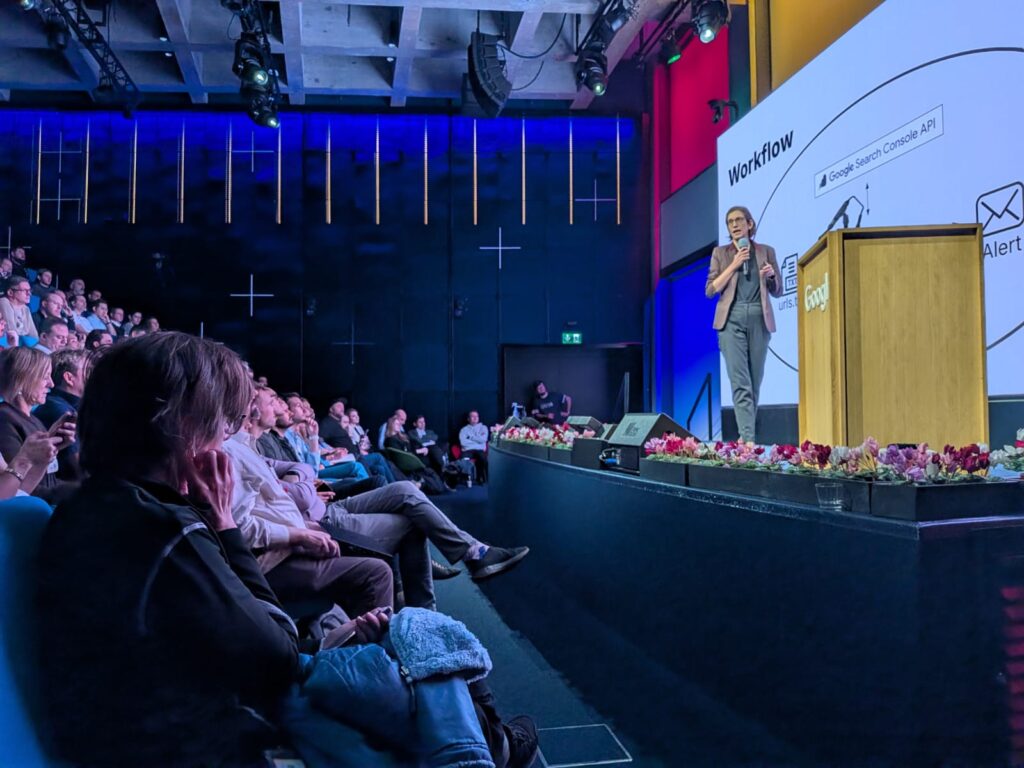
- Speaker at Google Search Central Live 2025
- Co-organizer of SEOnerdSwitzerland & WordPress Zurich Meetup
- Published articles in SEOFOMO, Tech SEO Tips, and Traffic Think Tank
- Consulting in German, English, and Spanish
“Working with Corina Burri was a real stroke of luck for us. As an SEO consultant, she didn’t just advise us at the highest level, she also guided us patiently through the sometimes dry SEO material. Corina managed to explain complex topics so we really understood them and could implement them. Her work was always reliable, her advice right on target, and thanks to her support we were able to significantly improve our digital visibility.”
Claudia Wasmer, Head of Communications and Marketing
Adullam Foundation
Find more projects and clients under References.
What is GEO (Generative Engine Optimization)?
GEO (Generative Engine Optimization) ensures your business appears as a source in AI answers. It’s no longer about classical rankings, but visibility in ChatGPT, Claude, Google Gemini, Perplexity, and Google AI Overviews.
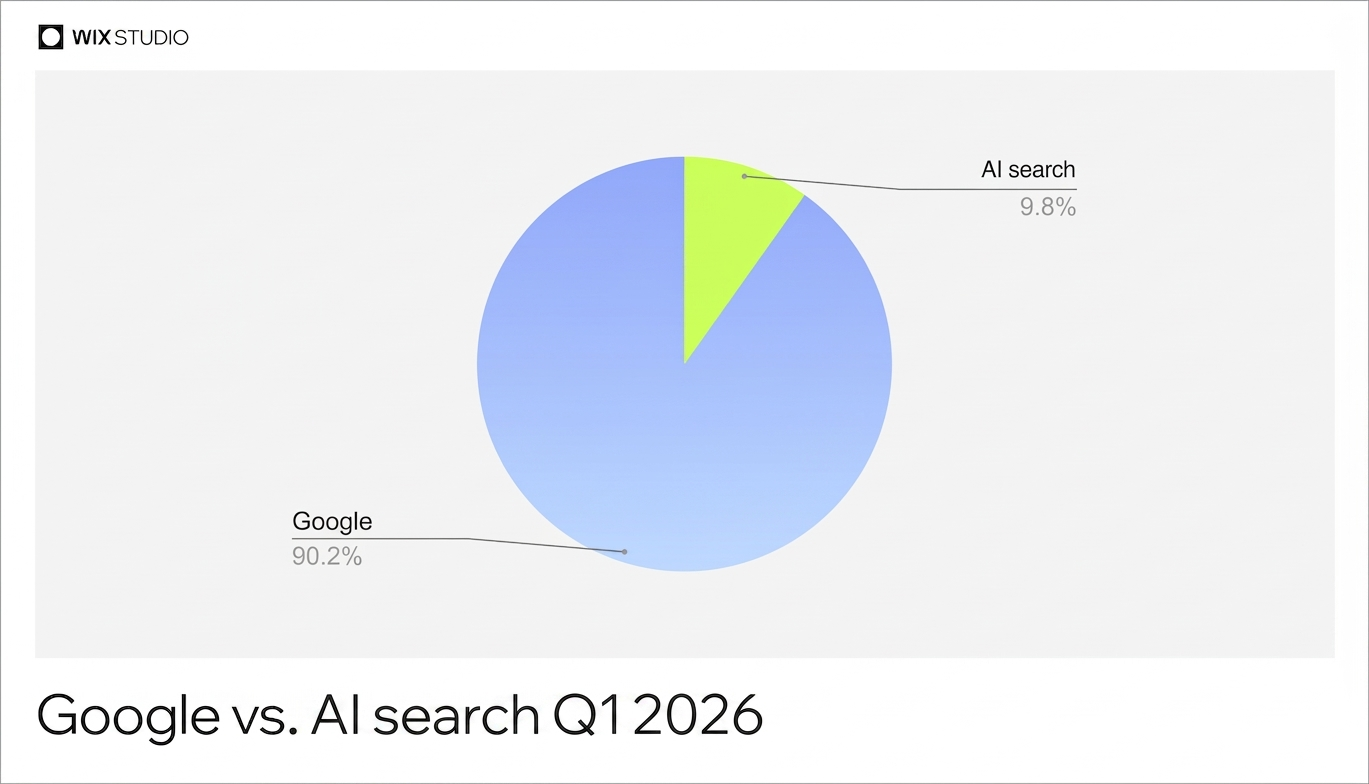
The channel is growing fast: according to Wix Studio data, around 9.8 percent of users searched in an AI system in Q1 2026. The foundation remains good SEO. Add three things: a structure where every statement is individually citable, clean entity information about your company, and mentions on websites the models already know.
GEO, LLMO, AEO, or AI-SEO: is there a difference?
At their core, the terms mean the same thing. GEO is the most widespread. LLMO (Large Language Model Optimization) is used mainly in Switzerland and Germany. AEO (Answer Engine Optimization) emphasizes the answer engine. AI-SEO is the colloquial variant, and AI visibility describes the goal behind it.
Query Fan Out: how AI breaks down your question into sub-questions
AI systems break a query into multiple sub-questions and search separately. When someone asks ChatGPT about GEO consulting in Switzerland, the system searches in parallel for providers, pricing, experiences, and the definition of GEO.
Individual keywords aren’t enough anymore. You need a topic you cover in its breadth, including the surrounding questions.
Corina Burri, SEO & GEO Consultant
Here’s the truth about GEO:
- AI sends little traffic. The answer is right in the chat, the source is a small link at the edge. Anyone selling GEO as a traffic channel is selling an illusion. The value lies in the mention itself and the trust it creates.
- It looks better for purchase-intent questions. When people ask for providers, pricing, or specific products, they click through. That’s why I prioritize transactional topics first in audits. That’s where inquiries come from.
- Two paths lead into an AI answer. Either you appear in the sources that get cited anyway (listicles, directories, trade publications), or you’re the cited source with your own data. Both appear in the action plan.
Five levers to get cited in AI answers
1. Start paragraphs with the core statement
Put the answer at the beginning, not the context. AI systems pull individual paragraphs. A paragraph starting with three sentences of setup gets cited without the core statement or not at all. Example question: “How long does SEO take to work?”
Core statement hidden
“Search engine optimization is a process that depends on many factors. The competitive situation in your industry, domain age, and available team resources all play a role. Against this background, the question of duration cannot be answered in general terms.”
Core statement first
“SEO typically works after three to six months. Technical fixes show results faster; new content and mentions take longer. With strong competition, it can take up to twelve months.”
The left version never actually answers the question. An AI system finds nothing to cite there and takes another source.
2. Publish FAQ content
AI models are trained to answer questions. FAQs provide ready-made question-answer pairs that are directly usable. Format questions the way your customers ask them: “What does GEO consulting cost in Switzerland?” works; “Our services overview” doesn’t.
3. Build your brand and personal brand
AI prefers content known from different sources. A model that only knows your name on your own website will rarely recommend you.
- Be present on multiple platforms: own website, author pages, LinkedIn, industry directories.
- Be clearly positioned: who you are, what you specialize in, where you operate.
- Be specific, not vague: not “we do digital marketing,” but “SEO and GEO for financial services in Switzerland.”
- Name dropping is welcome: mention media, awards, and conferences. These are entities language models know, and they reflect well on you.
4. Expand mentions across the web
Mentions are the new backlinks, and they don’t even need a link. It’s enough if your name appears in the text. Specifically: publish press releases, add entries to relevant directories, and ask partners to mention you in text rather than just with a logo. A logo is no information for a language model.
5. Schema markup and AI bots
Schema markup serves Google and AI with structured information about your company. Important types are Organization or ProfessionalService, Person, and FAQPage, with all digital profiles linked via sameAs.
The most common avoidable mistake: a robots.txt that blocks AI crawlers. Check whether GPTBot, OAI-SearchBot, ClaudeBot, PerplexityBot, Google-Extended, and Bingbot have access. More on this in my article From SEO to AI Optimization (GEO).
Where GEO differs from classical SEO
Good SEO is good GEO. Anyone telling you everything is different now just wants to sell you something. The difference is in the weighting, not the foundation.
| Same as SEO | Where I place more emphasis in GEO |
|---|---|
| Fast load time | Don’t block AI bots |
| Content visible without JavaScript | Core statements first, then context |
| Maintain page titles and meta descriptions | More and better FAQ content |
| Clearly describe what you do | Mentions from various sources |
| Publish helpful content, never copy | Clean entity markup (schema, sameAs) |
Who benefits from GEO consulting
GEO works strongest where people research before buying and need trust. These are my focus areas:
- Financial services and insurance: long research phase, complex questions, regulatory content requirements. More under GEO for financial services and for insurance.
- SaaS and tech: software gets bought through comparisons, and comparisons increasingly run through AI. If you’re missing from cited listicles, you won’t make the shortlist. More under GEO consulting for SaaS and tech.
- B2B service providers with complex offerings: when multiple people decide, heavy research happens before first contact. An AI system mention replaces a network tip.
GEO consulting in Zurich and throughout Switzerland
My office is in Zurich Altstetten, and I work throughout the canton of Zurich on-site or remote. If you’re looking for a GEO consultant or specialist in Zurich: we can meet for coffee before you decide. I co-organize SEOnerdSwitzerland and the WordPress Zurich Meetup and know the local scene.
Outside Zurich I work throughout German-speaking Switzerland. (Bern, Basel, Winterthur, St.Gallen)
Frequently asked questions about GEO in Switzerland
Do I need a GEO agency or is a consultant enough?
For most Swiss SMBs a consultant who implements themselves is sufficient. A GEO agency makes sense if you need large implementation teams, run multiple languages in parallel, or manage media budgets simultaneously. I’ll tell you what makes sense for your situation in our first call.
What does GEO consulting cost in Switzerland?
There are three models: the GEO audit as a one-time project, monthly support over six to twelve months, and a consulting retainer for teams implementing themselves. Find the current approaches under Services and pricing.
How long before my business appears in AI answers?
Pretty quickly! Unlike classical SEO, AI right now gets your content visible much faster.
How do I measure if my business is mentioned in ChatGPT, Claude, or Perplexity?
Two ways: referral traffic from AI systems in GA4, and regular queries of defined prompts whose results are tracked as a time series. Single queries don’t work because the same question can generate different answers. Both run together in my Looker Studio dashboard.
Do I have to give up SEO if I focus on GEO?
No, quite the opposite. Good SEO is the foundation for good GEO. Without clean technology, clear structure, and helpful content, AI visibility won’t work either. GEO complements SEO; it doesn’t replace it.
Does GEO help if AI barely sends clicks to my site?
Yes, but not as a traffic channel. The value lies in the mention itself, in the trust the mention creates, and in prospects arriving better informed. For purchase-intent questions, people click through much more frequently anyway.
Should I block AI bots in robots.txt?
If you want to appear in AI answers, no. Check whether GPTBot, OAI-SearchBot, ClaudeBot, PerplexityBot, Google-Extended, and Bingbot have access. Blocking for copyright reasons is a legitimate choice, but it excludes you from answers.
Do I need new content for GEO or is existing content enough?
Usually existing content is enough; it’s just structured wrong. Pull core statements forward, add FAQ sections, clean up entity names. New content makes sense where a relevant question currently goes unanswered.
What role does schema markup play in GEO?
Schema markup makes your company uniquely identifiable to machines. Important types are Organization or ProfessionalService, Person for the people behind it, and FAQPage. Particularly relevant is linking all your digital profiles via sameAs, including LinkedIn, author pages, and directory listings.
How do you figure out which prompts matter for my business?
From three sources: search queries in your Google Search Console, conversations with your sales and support teams, and the query fan out AI systems themselves perform. That becomes a list of 20-50 prompts we then measure continuously.
Do you work with businesses outside Zurich?
Yes. I work throughout Switzerland, on-site or remote. There are dedicated pages for Bern, Basel, and Winterthur. I offer consulting in German, English, and Spanish.
Why do you still talk about SEO and not just GEO?
Because they overlap 80 percent. Anyone selling GEO as a completely new discipline is mainly selling themselves. The foundations are the same; the weighting shifts. I do both because they belong together.
Book a discovery call
Tell me briefly where your business stands. I’ll look at the situation and give you an initial assessment of your AI visibility. Then you decide if we work together. No commitment, 25 minutes, free.
Prefer to write? Contact me via contact form or info@corinaburri.com.
Looking forward to it! 🙌